
Autumn in the forest: exploring, playing and growing together

Autumn in the forest means spending time outdoors, looking closely and playing together for our forest group. These photographs from Kinderkrippe und Waldkinderkrippe Blüemli show different moments in nature – among autumn leaves, beside a pond and at a wooden shelter.
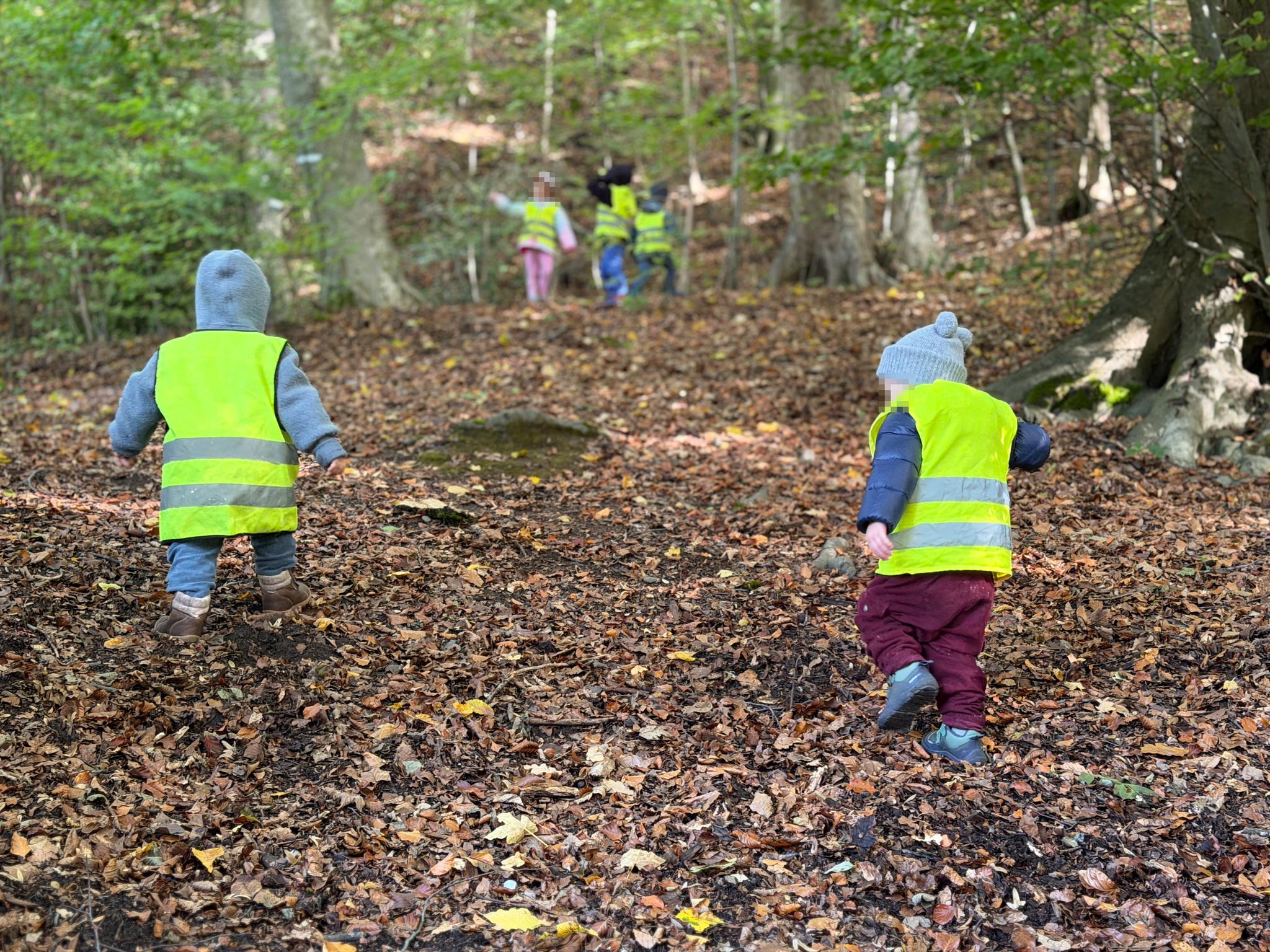
Small steps, new discoveries
A woodland path changes with the seasons. Leaves cover the ground, light filters through the trees and different surfaces invite children to move and explore. There does not always need to be a fixed destination. Discoveries often begin when children have time to pause, observe and follow their curiosity.
Uneven woodland ground offers varied opportunities for movement. Children can practise balance, adjust their steps and become more aware of their bodies. Each child has their own pace. Familiar adults provide guidance while making room for independent exploration.
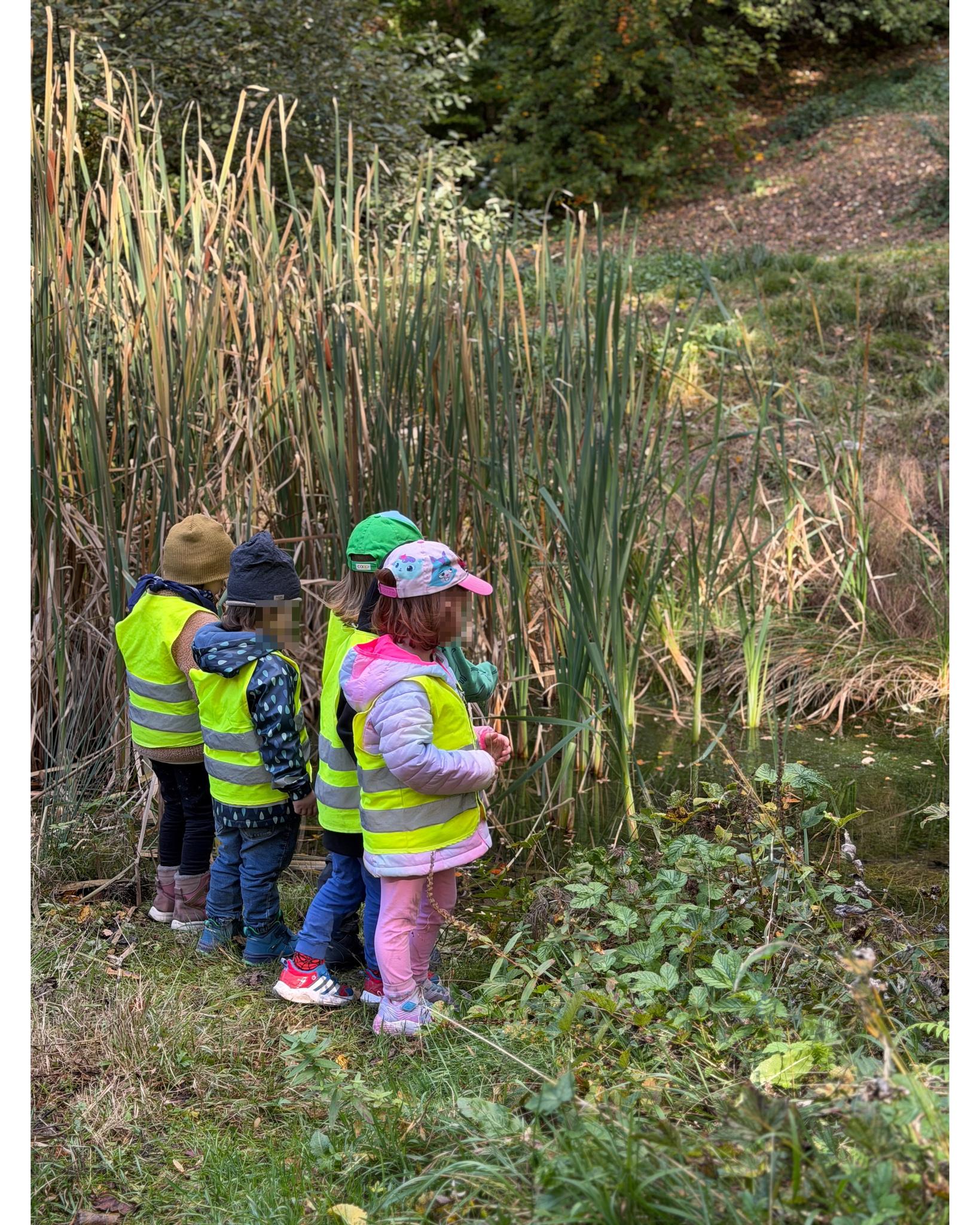
Taking a closer look at the pond
Quiet observation is part of outdoor life too. One photograph shows a small group beside a pond. The water, plants and shoreline offer many details to notice. Not every observation needs an immediate explanation: looking together and allowing time are valuable parts of discovery.
Conversations can follow what children notice. Adults can put impressions into words and ask open questions without expecting a particular answer. These moments connect language with direct experience.
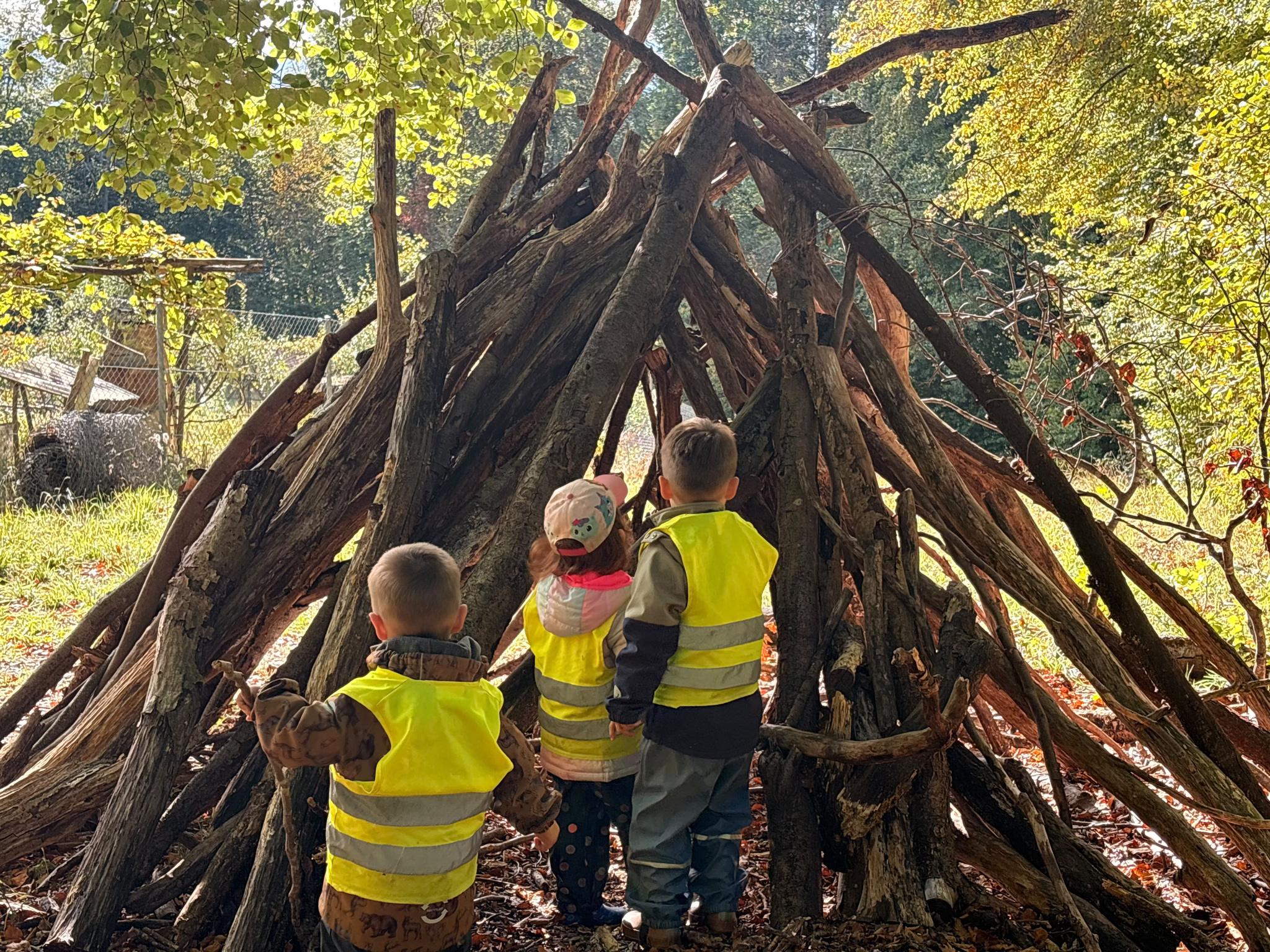
A wooden shelter inspires play
The large wooden shelter in the woodland photograph invites curiosity. Places like this can become starting points for free play: children look at shapes, explore spaces and develop their own ideas. The focus is on exploration and shared activity rather than a finished result.
Being part of a group
The photographs also show togetherness: children gathering in a circle and moving through the woodland as a group. Paying attention to others, sharing space and experiencing a moment together are part of everyday life. Nature provides a varied setting for movement and quiet moments alike.
Autumn in the forest: ideas for families
Even a short family outing offers a chance to see nature through a child’s eyes. Choose a manageable route with time to pause rather than a long walk with many stops. A familiar place can look different on every visit: a leaf has changed colour, the ground is damp, or sunlight shines through a new gap in the canopy. These differences can start a conversation.
Three simple ideas need very little preparation:
- Look for colours: which leaves are yellow and which are brown? Pointing them out and naming them together is enough; there is no need to collect anything.
- Listen to sounds: pause for a moment to hear the wind, footsteps or rustling leaves.
- Compare shapes: look at a tree trunk and a thin twig. What looks similar, and what is different?
Children can choose what interests them. A child who prefers looking to talking, or stays close to a familiar adult at first, is just as much part of the experience. Open questions such as “What do you notice?” leave more room than a little knowledge quiz. When attention fades, a break or the journey home may be the right next step.
Getting ready for time outdoors
Weather-appropriate clothing, supportive shoes and enough time help make an outing relaxed. Agree on simple rules before setting off, such as staying together and waiting at agreed places. Young children need close supervision beside a pond. Observe plants and animals and leave them in their habitat. Unknown berries, mushrooms and plant parts should never be eaten.
During autumn in the forest, activity and rest naturally alternate. A shared stop can be welcome after a stretch of walking. There is no need to organise every minute: time to look, ask questions or simply be there quietly is part of a good outing too. What matters is the children’s wellbeing and a pace that suits the group.
For more advice on visiting the forest considerately, see the forest etiquette guide from the Swiss Working Group on the Forest.
Get to know our forest group
Nature is an important part of our everyday educational approach. Find out more about our activities on the page about our Forest group and under Our Values. Would you like to get to know Kinderkrippe und Waldkinderkrippe Blüemli in Zurich Witikon? Please use our Enrolment to get in touch with us.